How the Oxygen Elite Series Supports Continuous Home Oxygen Therapy
Published: Wednesday, July 22, 2026
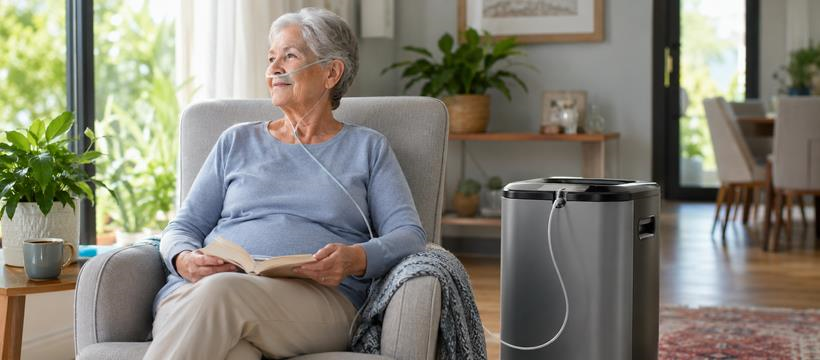
The Oxygen Elite Series with Nebulizer provides a reliable, continuous oxygen supply for home therapy, with safety alerts, quiet operation and built-in nebulizer functionality for added convenience.
If you've been prescribed long-term oxygen therapy, having a reliable oxygen concentrator at home can make everyday life a little easier. It provides a steady supply of oxygen, so you can stick to your prescribed treatment without relying on oxygen cylinders, all from the comfort of your own home.
A consistent oxygen supply at home
Unlike oxygen cylinders that need regular refills or replacements, the Oxygen Elite Series with Nebulizer takes in room air and filters out most of the nitrogen. The result is a continuous supply of concentrated oxygen delivered through a nasal cannula or oxygen mask.
As long as the unit has power, it can keep producing oxygen. The flow rate can also be adjusted to match the settings prescribed by a healthcare professional, so each user receives the amount of oxygen they need.
Features that support safe operation
When you're using oxygen therapy every day, it's important to know your concentrator is working properly.
The Oxygen Elite Series with Nebulizer includes an oxygen purity display, along with audible and visual alarms that alert users if something isn't right. These alerts can indicate low oxygen concentration, a power failure, incorrect flow, or a compressor fault, giving patients and caregivers the chance to act quickly if there's a problem.
The unit also keeps track of its operating hours with a built-in timer and accumulated runtime display. That makes it easier to schedule servicing and routine maintenance before issues develop.
Quiet and convenient for everyday use
Many people use an oxygen concentrator for several hours a day, and some need it while they sleep. A quieter machine makes a real difference, especially in a bedroom or shared living space.
The built-in nebulizer is a practical addition for people who also use prescribed nebulized medication. Instead of needing separate machines for oxygen therapy and nebuliser treatments, both functions are available in one unit. That means less equipment to manage and a tidier, more convenient home-care setup.
Professional guidance remains important
The Oxygen Elite Series with Nebulizer can make continuous home oxygen therapy easier to manage, but it should always be used according to your healthcare provider's instructions.
Use the prescribed oxygen flow rate, clean the filters and accessories regularly, and make sure the air vents stay clear so the machine can operate properly. It's also worth discussing a backup plan with your healthcare provider in case of a power outage or equipment failure.